Structural Drying in Anaheim, CA
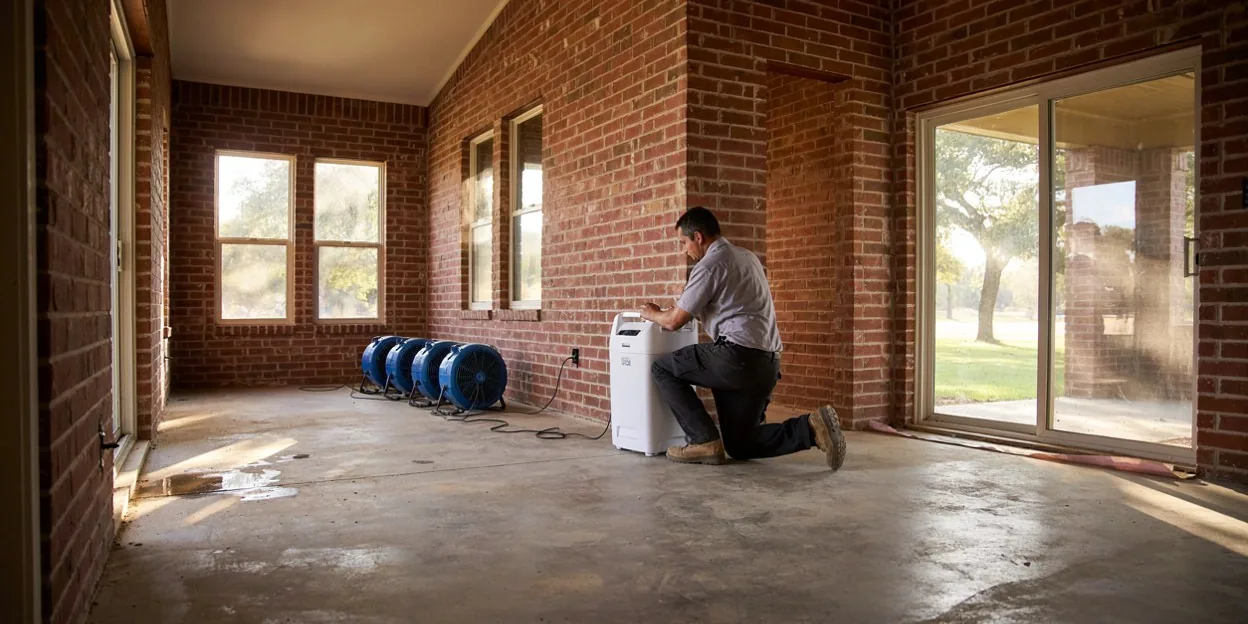
The plumber fixed the line on Tuesday and the puddle has been gone since Wednesday, but the bedroom still smells like a wet towel and the baseboard by the closet has a bubble in the paint. You have had a box fan on it for four days. This site puts you through to an independent local provider who dries houses in Anaheim and across north Orange County once the water is out.
Why a slab floor that looks dry is still wet underneath
Extraction takes the water you can see. Drying takes the water you cannot. On a slab house that water is in the carpet pad, in the bottom foot of drywall, in the sill plate the drywall sits on, and in the concrete itself, which soaks up water like a brick and gives it back for a week. A fan moves air across the carpet. It does not pull water out of a sill plate or a slab.
The crew sets air movers so the air sweeps along the wet walls and across the floor, and sets a dehumidifier sized for the room to take the moisture back out of the air. Without the dehumidifier the water just moves from the wall to the air and back to the wall. Then they meter every wet surface each day and write the numbers down, and the equipment comes out when the numbers match a dry wall in another room, not when the carpet feels fine.
Leave the windows shut and the machines running
The equipment is loud, and the first instinct in a warm Anaheim house is to open the windows and turn the machines off at night. Do not. The dehumidifier is working against the air inside the house, and an open window hands it the whole outdoors. Keep interior doors to the wet rooms open so the air can circulate, keep the wet rooms clear of furniture, and keep kids and pets away from the cords and the hot air coming off the movers. If a breaker trips, call the provider before you reset it.
What dries in place and what has to come out
Drywall that metered wet only at the base can usually dry in place once the baseboard is off and holes are drilled behind where it sat, so air gets into the wall cavity. Drywall that wicked more than a foot or two, or that sat wet for more than a few days, is cut out. Wet fiberglass insulation comes out every time; it holds water against the studs and will not dry inside the wall. Framing nearly always dries in place. Carpet dries once the pad is gone. Cabinet boxes get holes drilled in the toe kick so air reaches the base.
If the drying call began with a warm spot and a high bill, the drying is the back half of a slab leak cleanup. If it began with mud under the garage door, it is the back half of winter storm flood cleanup, and what comes out versus what dries is decided by what the water carried in.
Drying a closed house through a damp Orange County winter
Most water losses here happen between December and March, when the rain comes and when the slab leaks that ran all fall finally show. That is also the season the air outside is wettest. A January morning in Anaheim can sit at 90 percent humidity, so the outdoors is no help. The dehumidifier does the work the climate will not.
The houses themselves are a mix. The 1950s and 1960s ranches in West Anaheim and along Ball Road have plaster in the older ones and drywall in the rest, slab floors, and small closed rooms that dry fast once the air is moving. The two-story homes in Anaheim Hills from the 1970s through the 1990s have more drywall, more carpet, and a second floor that drips into the first. A leak upstairs means ceiling, joists, and the room below all go on the meter.
Drying records matter for the claim. A California homeowners policy often pays for the sudden damage from a burst or a failed line, and the adjuster wants to see the readings that show when the house was wet and when it was dry. This site makes no promise about what a policy pays; the log is what gives the adjuster something to work with.
Calling about a room that is dry on top and damp underneath
Say when the water came in and when it stopped, which rooms were wet, and what has been done since. Mention a smell that has not gone away, a baseboard that is lifting, or paint that is bubbling. The provider will want the address and a callback number, so have both ready. Call (657) 239-3689.