Water Damage Restoration in Anaheim Colony, CA
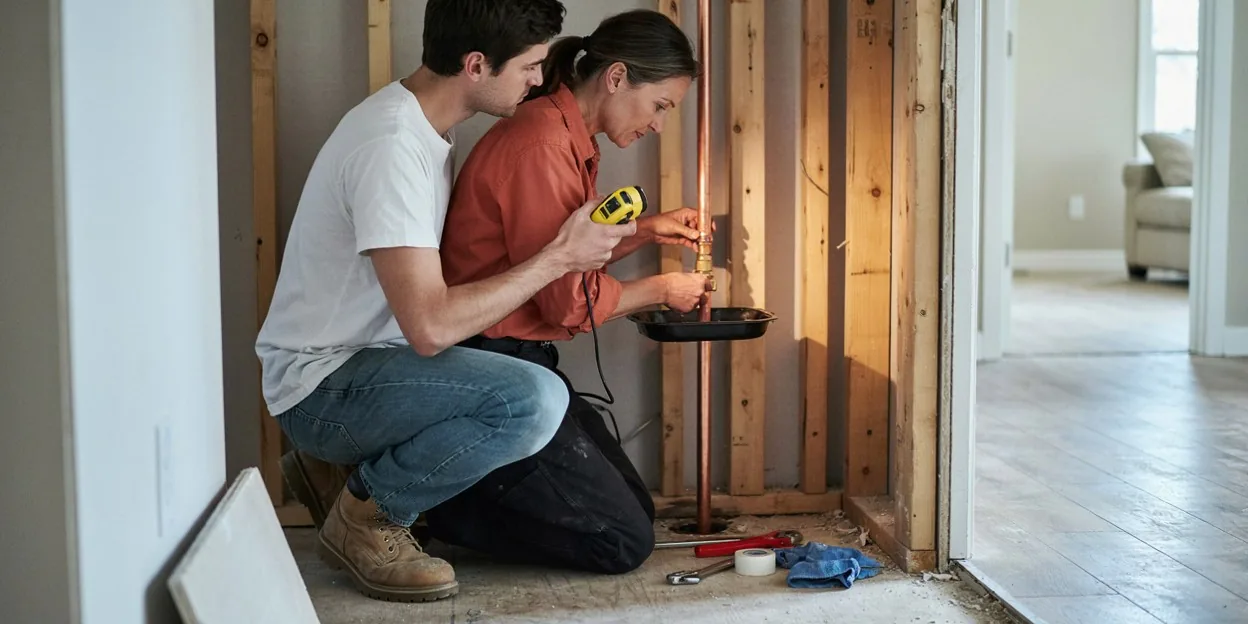
The Anaheim Colony is the original 1857 town site, the square mile bounded by North, South, East, and West Streets that the German vintners laid out on a grid beside the river. The houses inside it are the oldest in the city: Victorians from the 1880s, Craftsman bungalows from the 1910s and 1920s, and Spanish Revival cottages from the 1930s, most of them on raised foundations with a crawl space underneath instead of a slab. The city made it a historic district in 1997.
Old houses carry old plumbing. Galvanized steel supply lines that rusted shut from the inside, cast-iron drains under the crawl space that have lost their bottoms, and a water heater that was retrofitted into a closet built for an icebox. When one of those fails, the water drops into the crawl space and stays there, out of sight, until the floor above it starts to feel soft.
This site connects Colony homeowners with an independent local water damage provider by phone. The provider goes under the house with a meter before anything gets written down.
Anaheim Colony water damage in a house with a crawl space
A soft spot in the oak floor and a musty smell with no visible leak is a leak detection call, and the search starts under the house. Standing water in the crawl space after a galvanized line let go is water extraction from below, then structural drying of the joists and subfloor. A hundred-year-old cast-iron drain that finally gave up and backed into the bathroom is sewer backup cleanup.
Permits, history, and a district that watches its exteriors
The Colony's rules on what can change outside a contributing house are laid out by the City of Anaheim on its Anaheim Colony Historic District page, and a reroute that would show on a street-facing wall or a replacement window after a leak needs a look from the planning side as well as a building permit. Interior drying and repair do not.
Call (657) 239-3689 and say what you found under the house. An independent local water damage provider serving the Colony takes it from there.
Services Available in Anaheim Colony
Water Extraction
Standing water pulled off tile, carpet pad, and the concrete slab under them, followed by the first meter readings at every wall base.
Structural Drying
Air movers and dehumidifiers run against daily readings until slab, studs, and drywall come back to dry in a closed-up Anaheim house.
Leak Detection
The warm tile, the spinning meter, and the damp carpet traced to a pipe under the slab or inside a wall before anyone opens concrete.
Slab Leak Cleanup
Cleanup after hard water pitted a copper line under the slab, with the soaked flooring, cabinet bases, and lower drywall dried or removed.
Winter Storm Flood Cleanup
Mud and street water pumped out of a garage or living room after an atmospheric river, and everything it touched sorted for drying or disposal.
Water Heater Leak Cleanup
Drying after a tank in the garage or a hallway closet let go, including the drywall behind the stand and the rooms on the other side of it.
Sewer Backup Cleanup
Removal of water that came up through a shower drain or toilet from an aging cast-iron line, with contaminated flooring and drywall handled as such.
Roof Leak Water Damage
Attic insulation, ceilings, and walls dried after wind-driven winter rain found a cracked tile or a failed flashing on a north county roof.