Water Damage Restoration in West Anaheim, CA
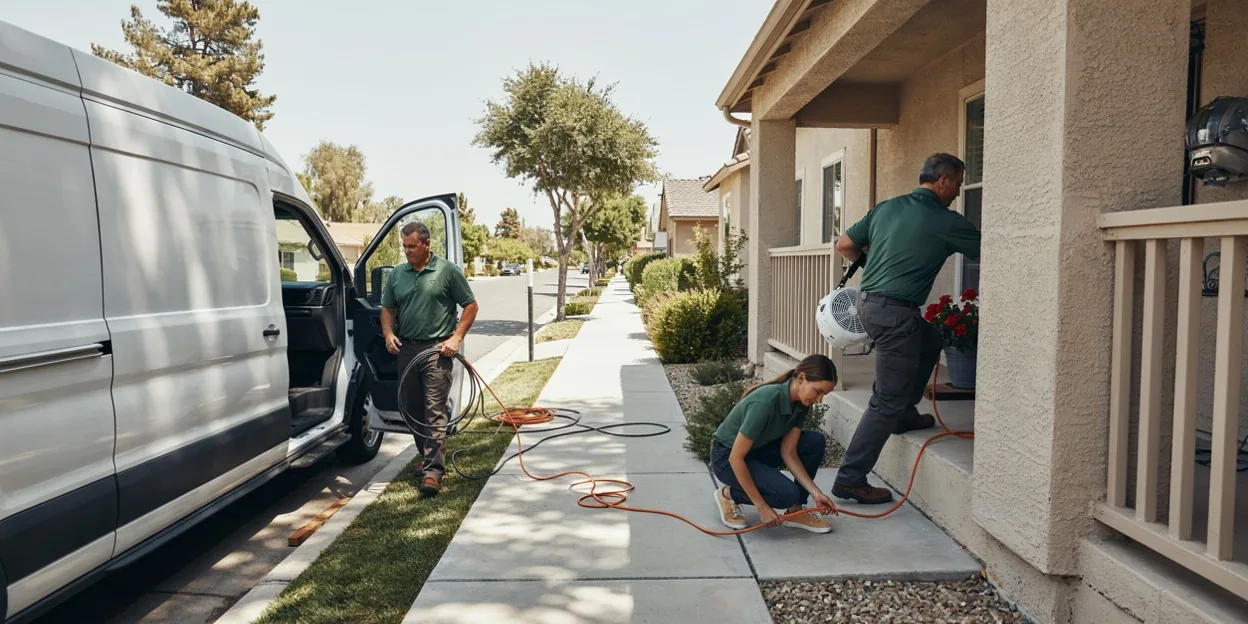
West Anaheim runs from Euclid Street west to the Cypress line, with Buena Park to the north and Stanton to the south, and nearly all of it was orange groves until Disneyland opened in 1955. Between then and 1970 the groves came out and the tracts went in: three-bedroom ranch houses on slabs along Brookhurst, Magnolia, Dale, and Western, with a strip of motels and shops down Beach Boulevard and Lincoln Avenue. The houses are now sixty to seventy years old, and so is everything under them.
Carbon Creek crosses West Anaheim in a concrete channel on its way to Coyote Creek, and the land around it is as flat as a table. Rain that the storm drains cannot swallow sits in the street. The copper under the slabs has carried hard groundwater since Eisenhower, and the hot side goes first.
This site connects West Anaheim homeowners with an independent local water damage provider by phone. The provider meters the floor and the walls before the scope gets written.
West Anaheim water damage in a 1960 three-bedroom ranch
A hallway tile that is warm underfoot and a bill that climbed is a leak detection job, and the floor and cabinets it soaked afterward are a slab leak cleanup. A water heater on a wooden stand in the garage that split its seam and soaked the bedroom wall behind it is a water heater leak cleanup. Storm water under the garage door after a stalled February front is winter storm flood cleanup.
The channel, the flat lots, and the permit desk
Carbon Creek was put in its concrete box by the county decades ago, and it carries the runoff from Placentia and Fullerton through West Anaheim without trouble in a normal year. The trouble is local: a grate blocked with leaves at the end of a cul-de-sac, and a slab house with four inches of curb between the lawn and the carpet. Rebuild permits for plumbing, drywall, and wiring go through the City of Anaheim's building counter downtown.
Call (657) 239-3689 and tell us whether the floor is warm, soft, or both. An independent local water damage provider serving West Anaheim picks it up from there.
Services Available in West Anaheim
Water Extraction
Standing water pulled off tile, carpet pad, and the concrete slab under them, followed by the first meter readings at every wall base.
Structural Drying
Air movers and dehumidifiers run against daily readings until slab, studs, and drywall come back to dry in a closed-up Anaheim house.
Leak Detection
The warm tile, the spinning meter, and the damp carpet traced to a pipe under the slab or inside a wall before anyone opens concrete.
Slab Leak Cleanup
Cleanup after hard water pitted a copper line under the slab, with the soaked flooring, cabinet bases, and lower drywall dried or removed.
Winter Storm Flood Cleanup
Mud and street water pumped out of a garage or living room after an atmospheric river, and everything it touched sorted for drying or disposal.
Water Heater Leak Cleanup
Drying after a tank in the garage or a hallway closet let go, including the drywall behind the stand and the rooms on the other side of it.
Sewer Backup Cleanup
Removal of water that came up through a shower drain or toilet from an aging cast-iron line, with contaminated flooring and drywall handled as such.
Roof Leak Water Damage
Attic insulation, ceilings, and walls dried after wind-driven winter rain found a cracked tile or a failed flashing on a north county roof.